Overview of Energy Efficiency in Our Laser Cutting
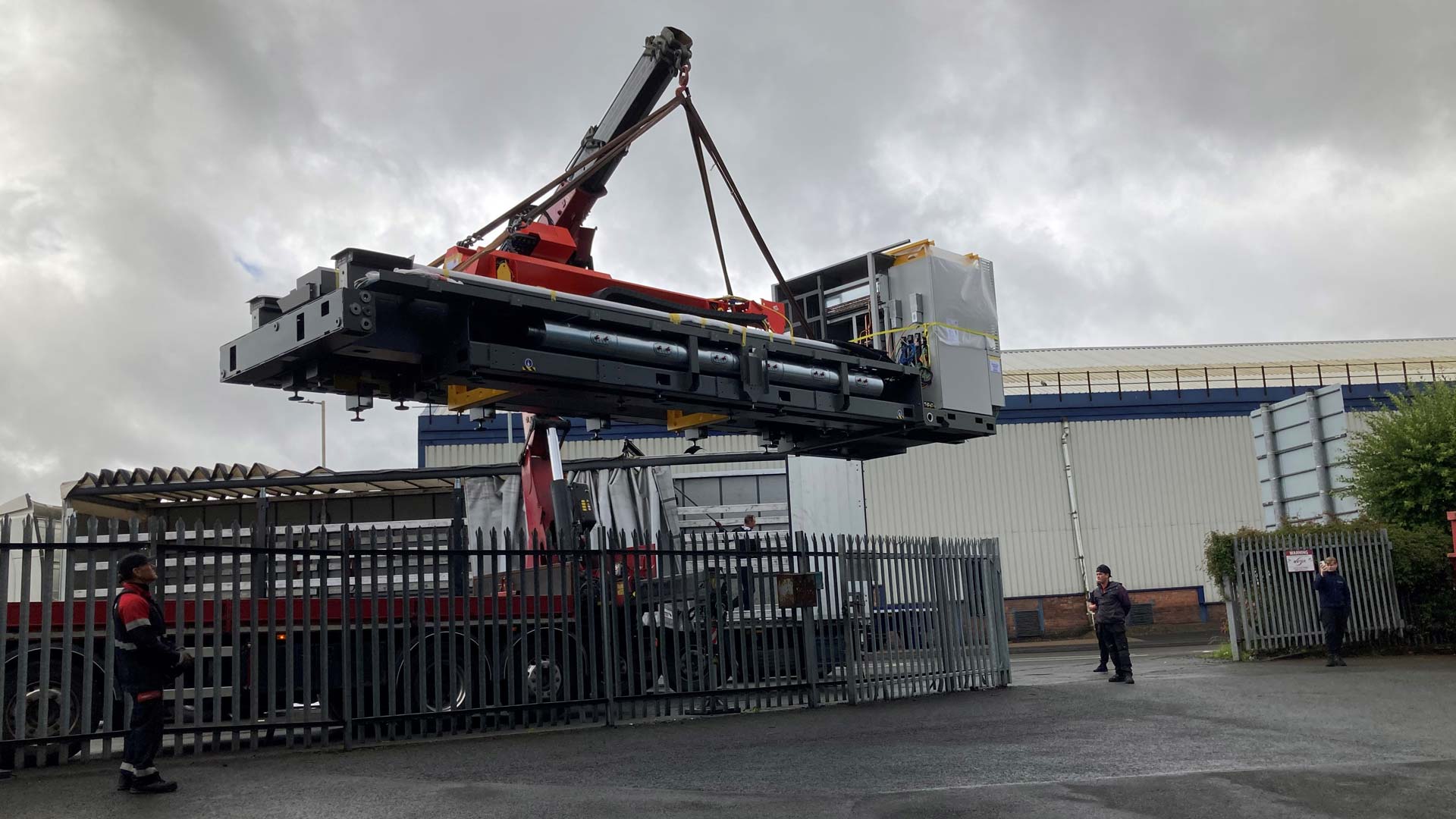
There’s never been a better time to focus on energy efficiency in manufacturing. Between 2018 and 2023, we successfully reduced our energy usage by 50%; however, these savings didn’t happen overnight. They were the result of five years of gradual changes and investment. By making a conscious effort to become more efficient and sustainable, we not only achieved our original goal; it also inspired us to go even further in reducing our energy consumption.
Company-Specific Data
We’ve been tracking our site-wide energy usage since 2018. We collect data using power meters and record it on analysis sheets to monitor any increases or reductions. These figures cover the entire site and not just individual machines. The table below shows the gigawatt hours (GWh) used during the years we set our energy reduction targets, along with subsequent years:
| Year | Energy Usage (GWh) | Notes |
|---|---|---|
| 2018 | 1.98 GWh | Baseline year – CO₂ lasers in use |
| 2023 | 0.99 GWh | Fiber laser upgrades |
| 2024 | 0.83 GWh | Further 16% reduction across site |
| 2025 | 0.75* GWh | *Predicted data only |
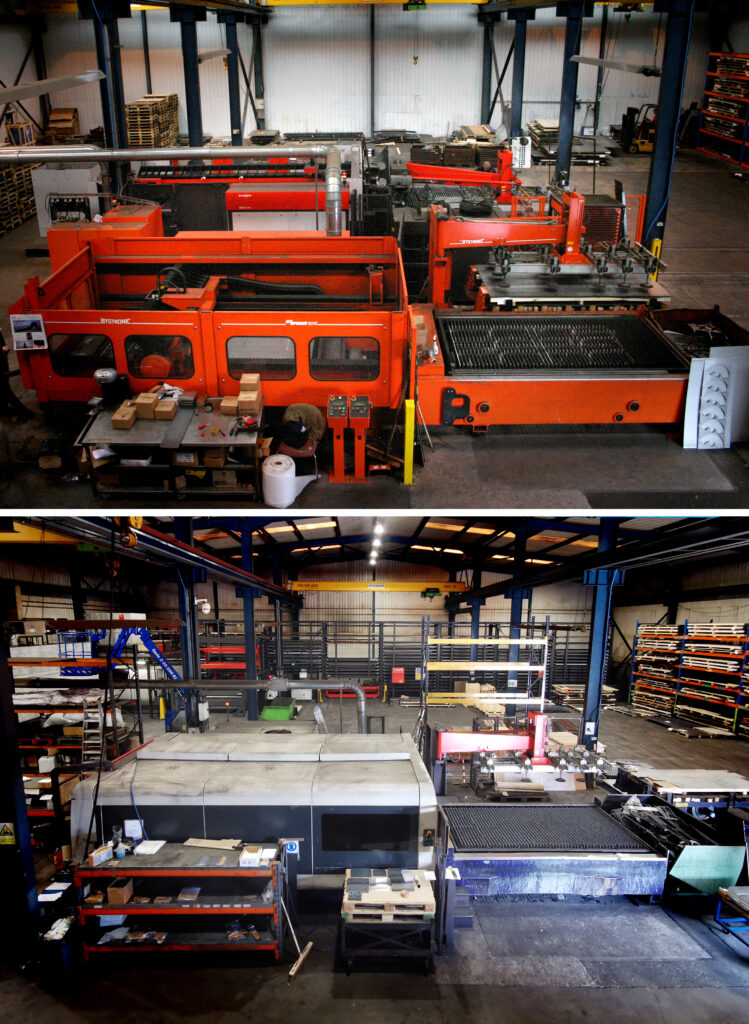
Back in 2018, we were running four CO₂ lasers. We have produced our own nitrogen since 2010, and we upgraded the system in 2018. This not only replaced outdated technology but also prepared our facility for the installation of our 10kW fiber laser the following year.
Reaching the 50% reduction was a significant achievement, but the unexpected 16% drop between 2023 and 2024 has been an added bonus. This is now the area we are focusing our efforts on. Early figures from 2025 suggest further reductions, which we look forward to analysing in more detail.
Laser Cutting Energy Consumption
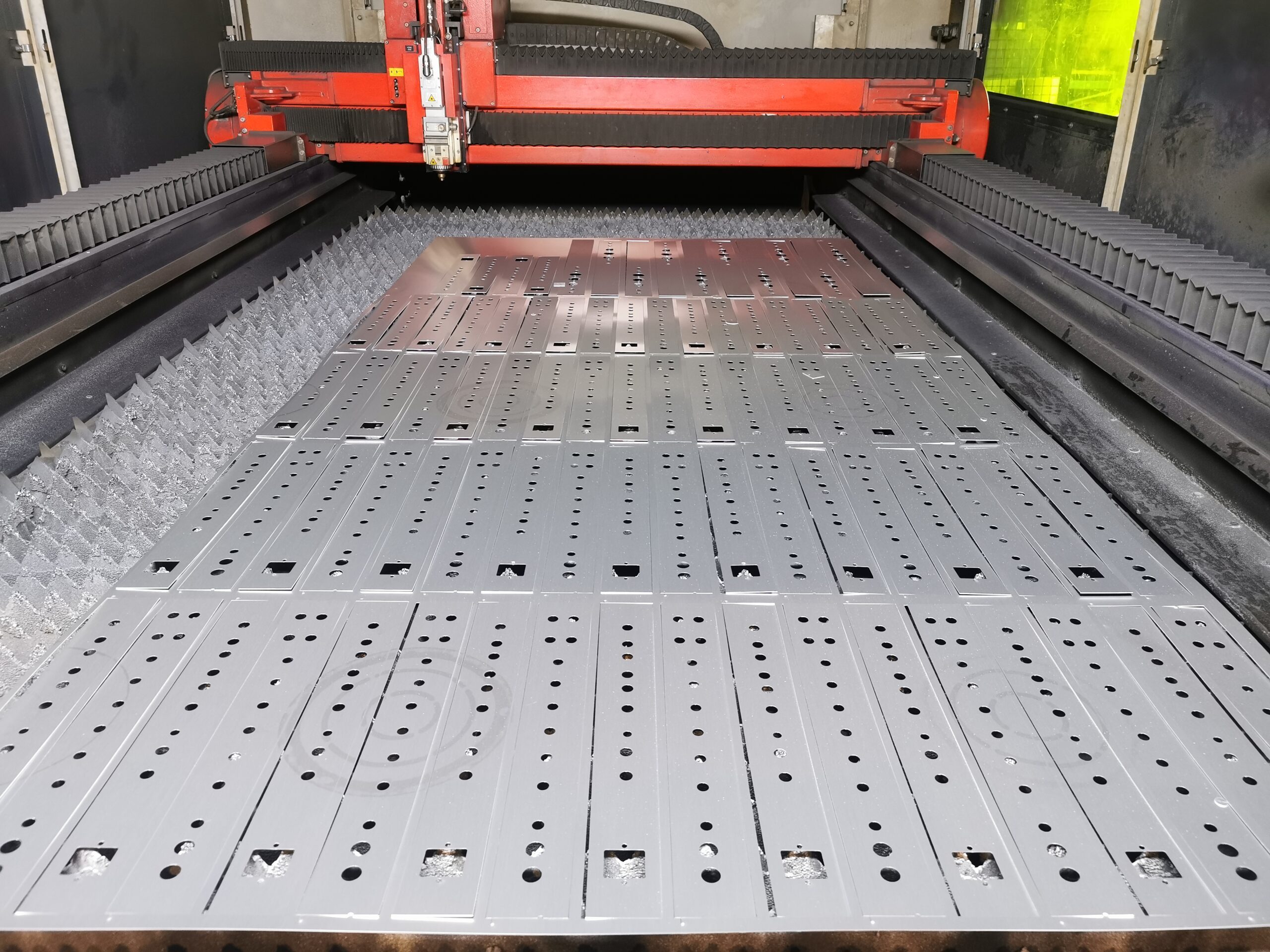
As per our previous article,Reducing Our Energy Usage by 50%, the main reason for this energy reduction is the replacement of CO₂ lasers with fiber lasers. This shift in technology has not only reduced energy usage but also increased the capacity of our laser cutting operations. Fiber lasers can deliver significant energy savings, along with faster and more precise cutting.
Using our tower system and automation, our 10kW fiber laser can run outside normal hours, making use of off-peak electricity. This system automatically loads raw materials for cutting and stacks the finished parts and scrap for unloading later.
Nitrogen Generation
Another major contributor to our overall energy reduction was the installation of our on-site nitrogen generator. We began producing our own nitrogen in 2010, and an upgrade in 2018 played a significant role in the five-year energy reduction. In 2024, we installed a further upgrade, which is even more energy-efficient and provides improved control for our operators.
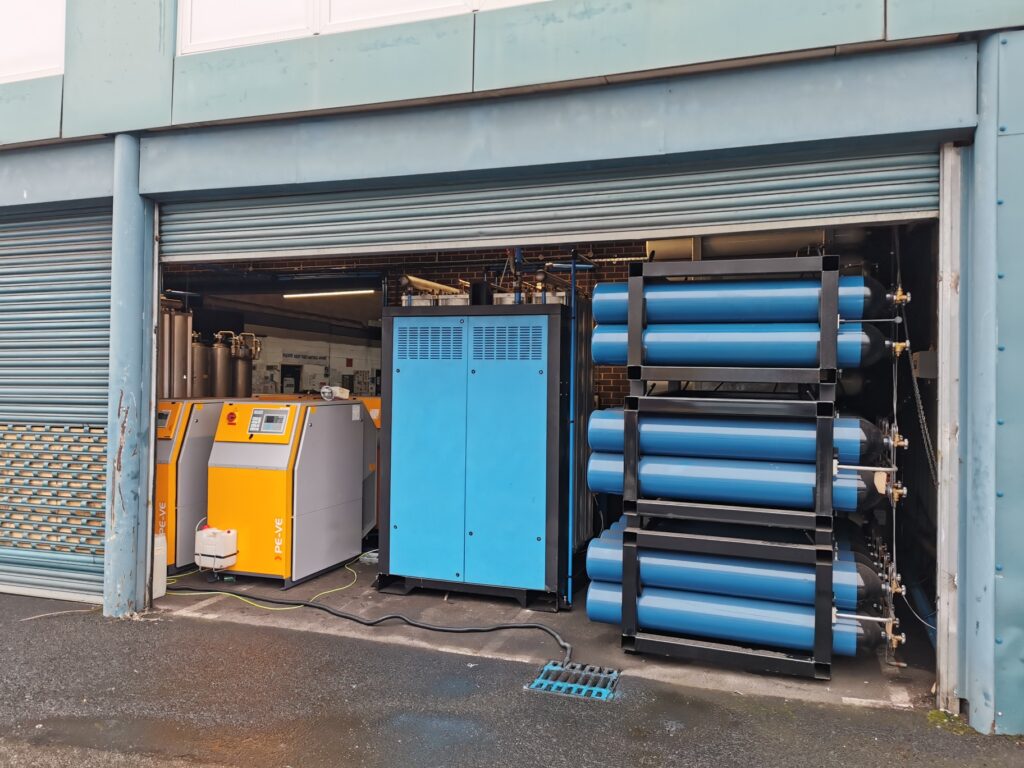
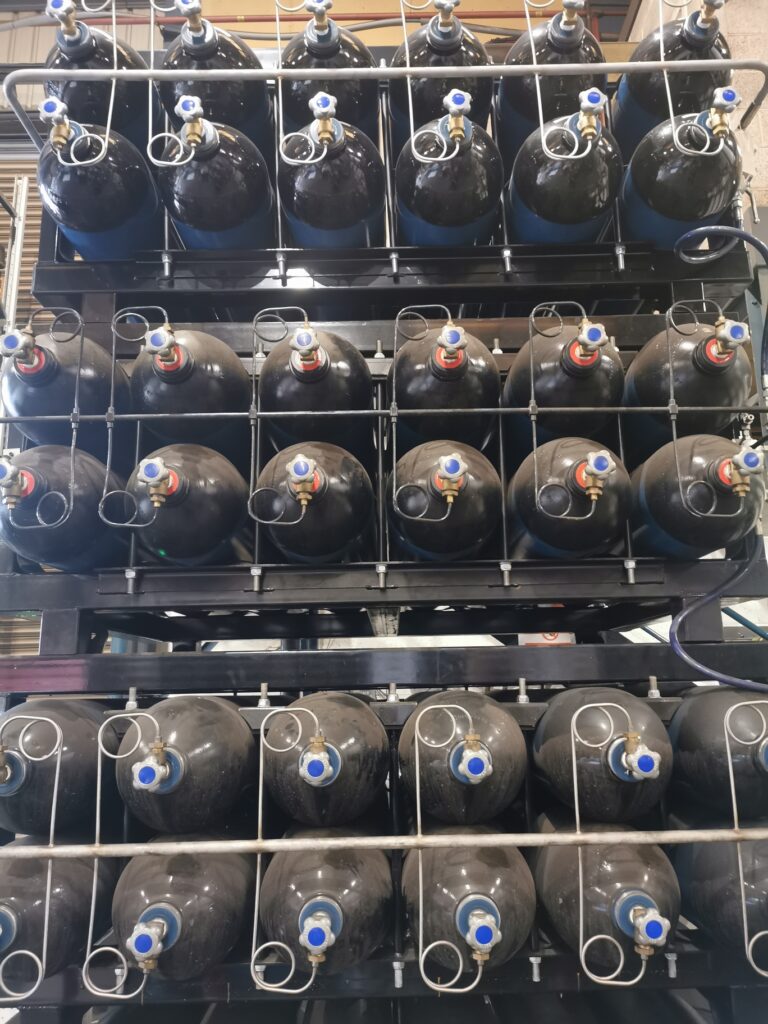
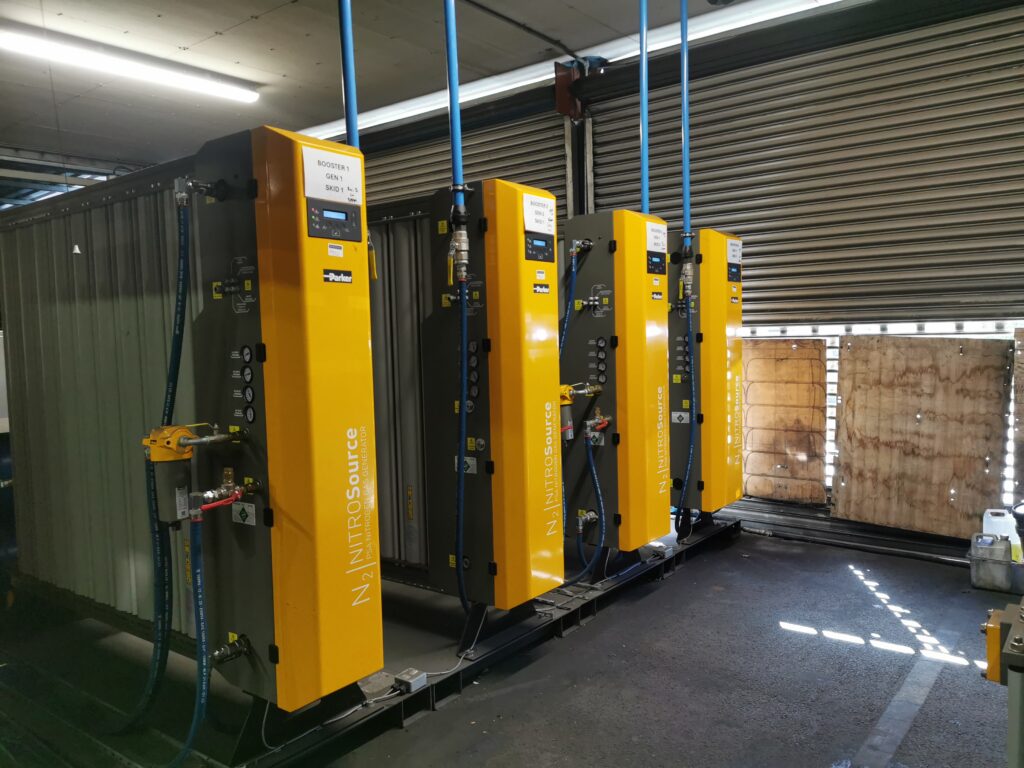
Producing our own nitrogen helps save energy by cutting down on deliveries. Previously, we used an average of 400,000 to 600,000 litres of liquid nitrogen per year. Our old on-site tank held 10,000 litres and required refilling every 2–3 days to maintain a consistent supply for the lasers. Over the past 15 years, generating our own nitrogen has eliminated the need for around 100 deliveries per year to our factory.
Since upgrading our laser machines to fiber technology, the balance has changed. The fiber lasers use significantly less electricity than the CO₂ machines they replaced, which means our nitrogen generator is now one of the largest users of electricity on site. We have energy monitors in place to track how much power the generator is using, and we are now looking at how we can better time when it runs. By matching nitrogen production more closely to demand, we hope to reduce its electricity use further.
For more information on this, please click here.
Press Brake and Forming Efficiency
Forming plays an important role in our energy-saving efforts, all contributing to a more sustainable production process.
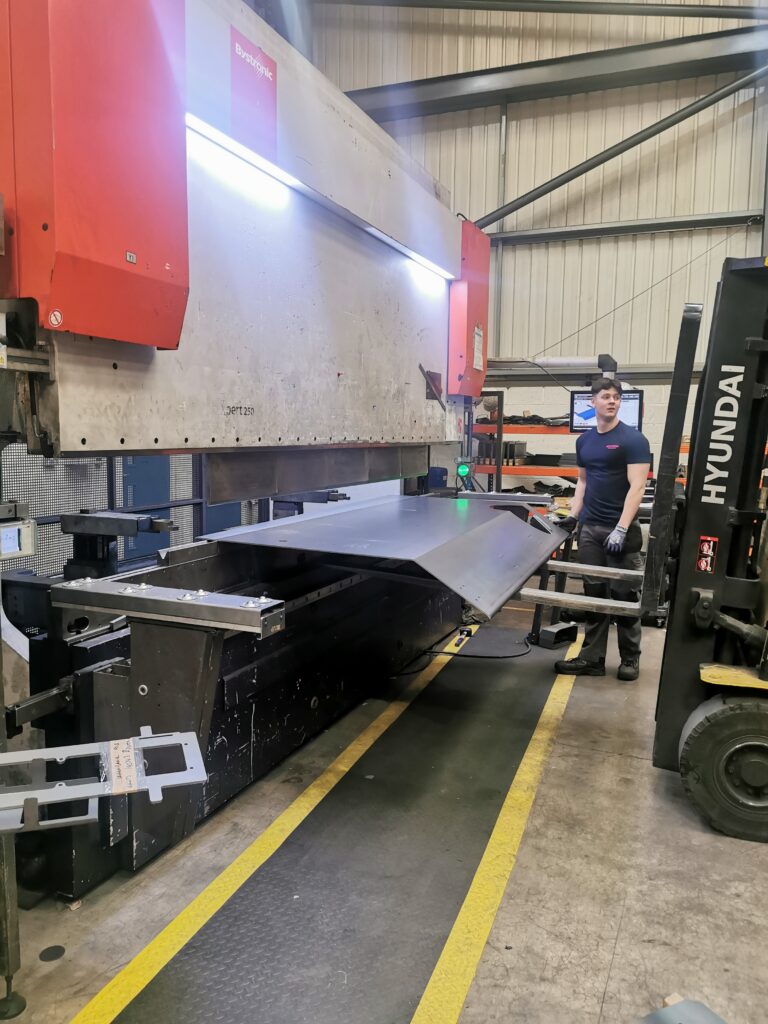
Our range of press brakes includes:
- 55 Tonne ByBend Smart E 55
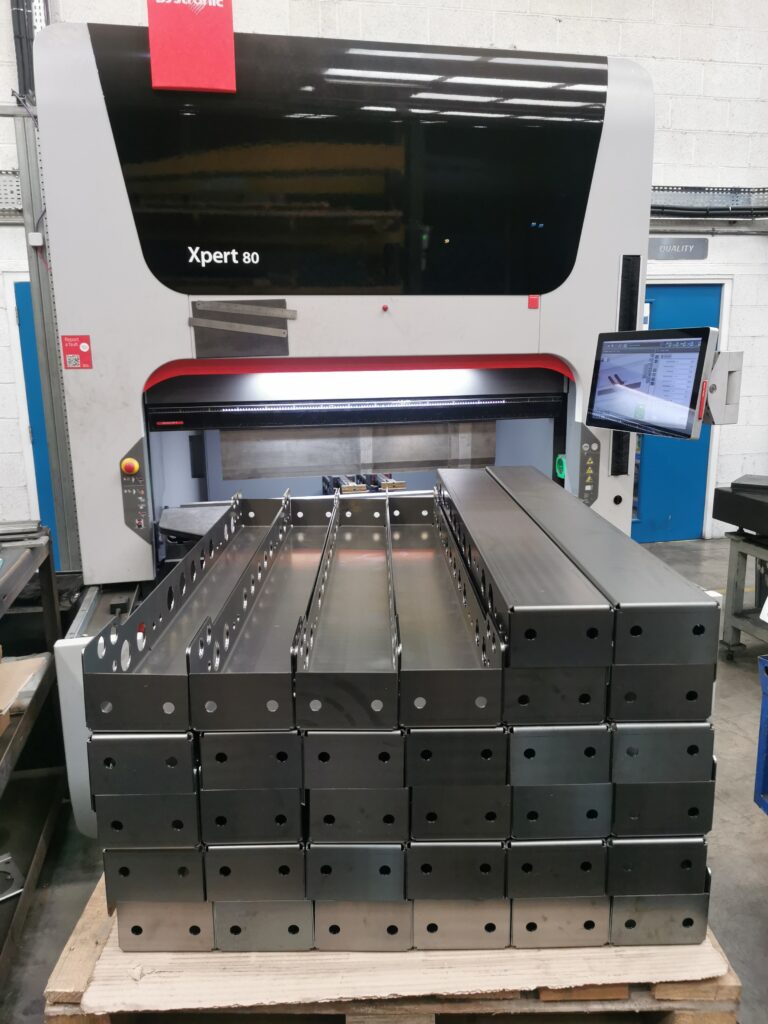
- 80 Tonne Xpert 80
- 225 Tonne ByBend Smart 225
- 250 Tonne Xpert 250
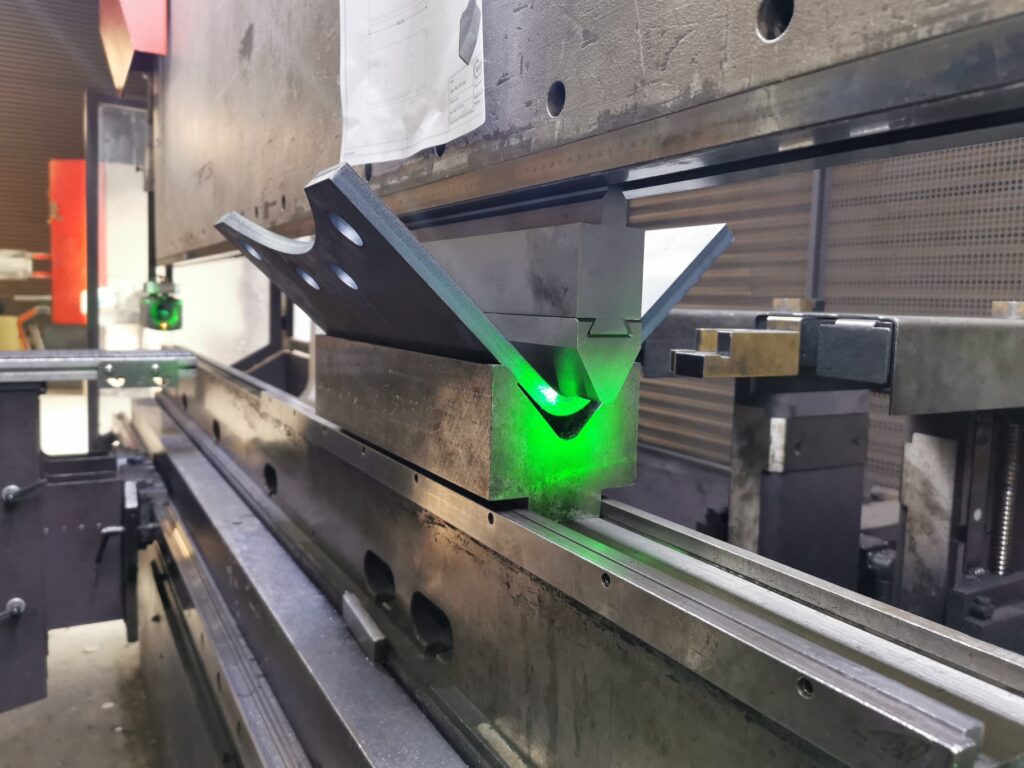
Our Xpert 80 bends at speeds of up to 25 mm per second and supports multiple bending stations along its 1.5-metre bed. This minimises downtime and energy use during tool changes and setup.
The smaller 55 Tonne ByBend Smart E 55 and the ByBend Smart 225 tonne presses are designed to use low amounts of electricity. The Energy Saver function on the 225T press ensures the machine’s main drive is only active when in operation, further enhancing efficiency.
For more details on the ByBend Smart, visit Bystronic’s Press Brake Machine Overview.
Looking Ahead
After meeting our previous target, we’ve become laser focused on energy efficiency, and we’re now taking more measurable steps towards even greater sustainability.
We hold ISO 14001 Environmental Management System certification, which ensures environmental impact is considered in every decision, particularly when purchasing new machinery. This standard guides us as we work towards even greater sustainability. We are committed to energy-efficient production, for the benefit of our employees, our customers and the environment. We do this through machine maintenance and energy efficient machine investments.
Our next 5-year target is to reduce energy consumption by 50% again: to reach 0.5 GWh.
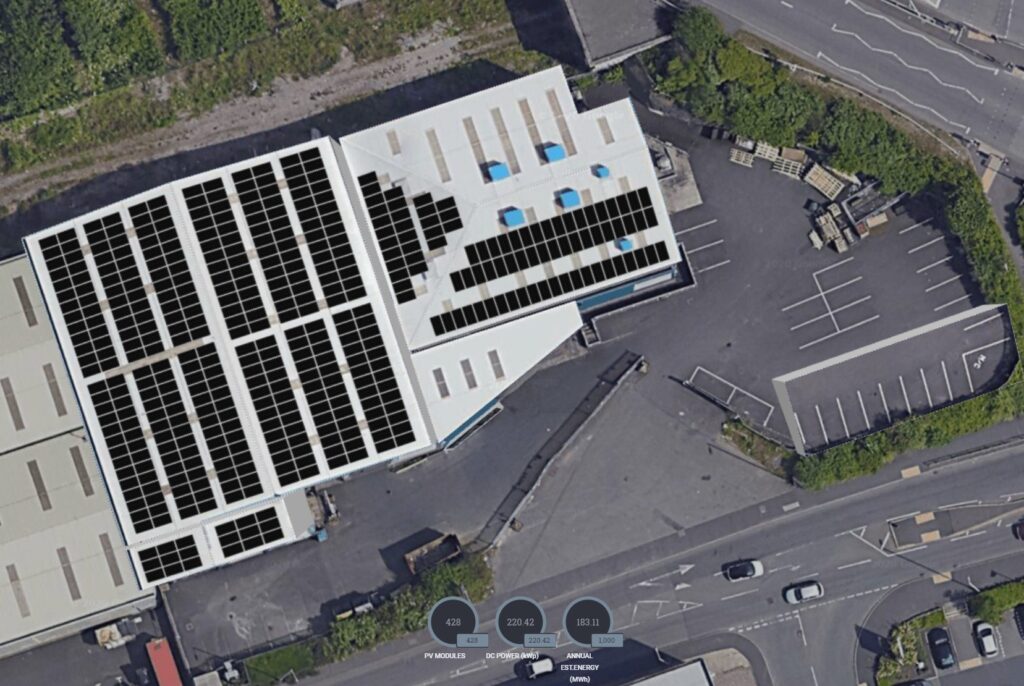
One of our potential upcoming major investments would be the installation of solar panels. This would be a significant step towards making the site more self-sufficient. Given that electricity is one of our largest operational costs, solar power could potentially provide up to 75% of our 2018 electricity usage, helping us achieve our target.
Other ideas we are exploring include:
- Using off-peak energy more efficiently and economically with potential storage options to help at peak times
- Reducing waste across site
- Improving recycling efforts
- Transitioning our entire fleet to electric vehicles (our company cars are already electric)
- Ensuring all grid-purchased energy comes from 100% renewable sources
- Monitoring and reporting our carbon emissions, allowing us to set meaningful reduction targets and track progress year-on-year
A 12-month energy analysis will help us compare and identify key areas for improvement.
Conclusion
Thanks for reading our article on how we’re Laser Focused on Energy Efficiency! We’re excited to see what’s next, particularly as we look into how solar panels might help our new energy goal.
We look forward to analysing our yearly reports which will give us the insights needed to make future decisions. This data will be posted here when available.